What do you actually need to build a 5-inch FPV drone?
Before soldering, configuring, or flying, every beginner needs to understand the main components that make up the complete system.
A 5-inch FPV drone is not just one product.
It is a combination of mechanical structure, power system, control electronics, video transmission, radio communication, antennas, batteries, propellers, hardware, and tools.
The goal is not to buy random parts.
The goal is to understand how every component works together before starting the build.
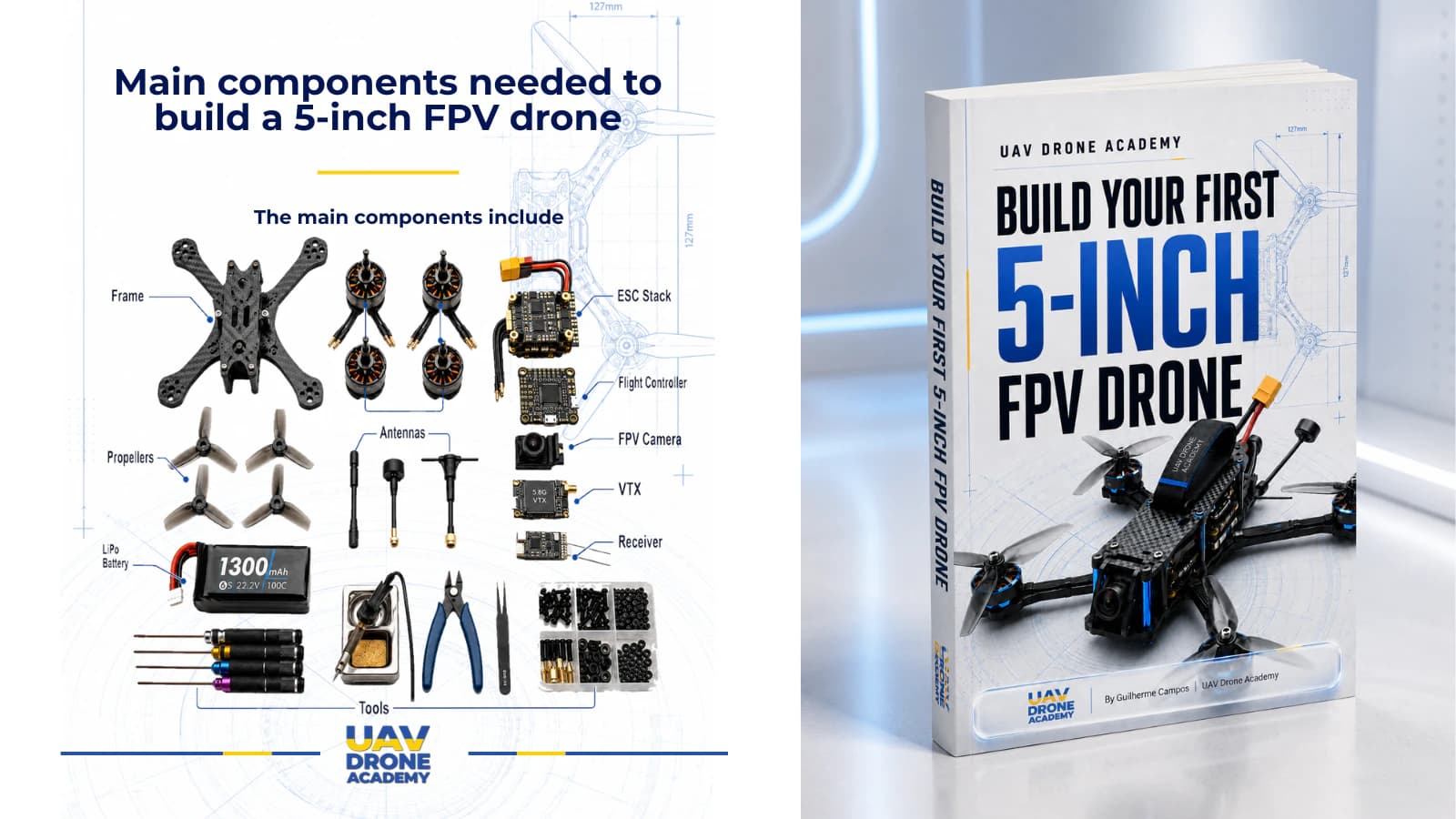
The Main Components of a 5-Inch FPV Drone
A complete 5-inch FPV drone build usually includes:
- frame
- motors
- propellers
- ESC stack
- flight controller
- FPV camera
- video transmitter, also called VTX
- radio receiver
- antennas
- LiPo battery
- screws, standoffs, and mounting hardware
- soldering and assembly tools
Each part has a specific role.
The frame holds everything together.
The motors and propellers generate thrust.
The ESC controls motor power.
The flight controller processes commands and stabilizes the drone.
The receiver connects the drone to your radio controller.
The FPV camera and VTX send live video back to your goggles.
The battery powers the entire system.
Frame
The frame is the mechanical foundation of the drone.
It holds the main components in position and gives the drone its structure.
A 5-inch FPV frame must provide space for:
- motors
- propellers
- flight controller
- ESC
- FPV camera
- VTX
- receiver
- antennas
- battery
- mounting hardware
The frame also protects the electronics during crashes and hard landings.
For beginners, a good frame should be:
- strong
- repairable
- easy to assemble
- widely supported
- compatible with common components
- large enough to work on comfortably
A good frame makes the rest of the build easier.
Motors
Motors spin the propellers and create thrust.
A 5-inch FPV drone normally uses four brushless motors.
Each motor is mounted on one arm of the frame.
Motor choice affects:
- power
- efficiency
- throttle response
- flight style
- battery current draw
- motor temperature
- overall flight feel
For a beginner 5-inch FPV build, the motors must match the propeller size, battery voltage, and intended flying style.
Motors should not be chosen randomly.
They are part of the complete power system.
Propellers
Propellers convert motor rotation into thrust.
In a 5-inch FPV drone, the term “5-inch” refers to the approximate diameter of the propellers.
Propellers affect:
- thrust
- efficiency
- responsiveness
- noise
- motor load
- flight smoothness
- battery consumption
A 5-inch drone needs propellers that match the motor and battery setup.
Propellers are also consumable parts.
They are often the first parts to break in crashes, so beginners should always keep spare props available.
ESC Stack
ESC means Electronic Speed Controller.
The ESC controls how fast each motor spins.
In many modern 5-inch FPV builds, the ESC is a 4-in-1 board.
That means one board controls all four motors.
The ESC receives commands from the flight controller and delivers controlled power to the motors.
The ESC is part of the power system, so it must be able to handle the current required by the motors and propellers.
A reliable ESC is essential for safe and predictable flight.
Flight Controller
The flight controller is the brain of the FPV drone.
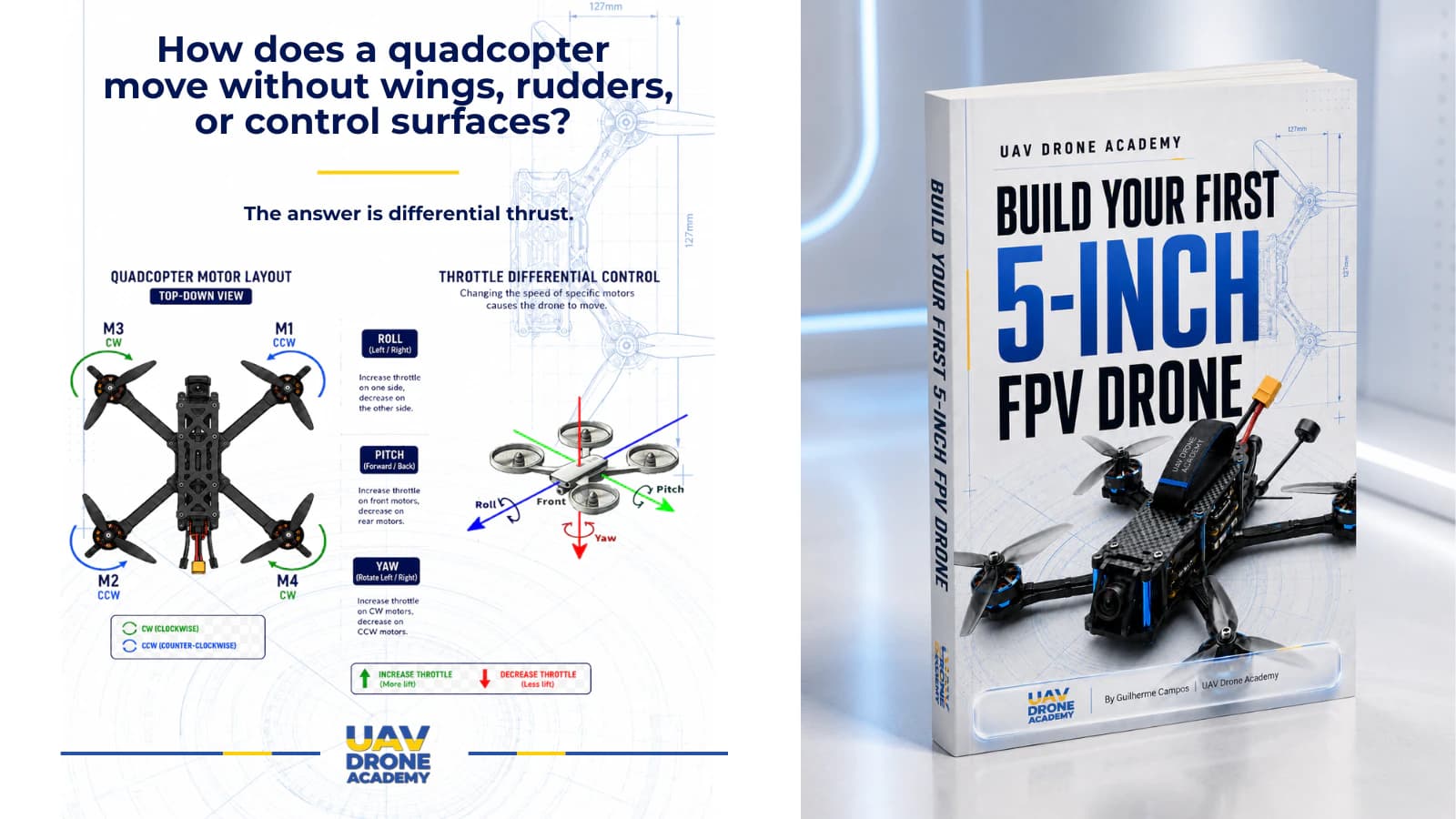
It receives inputs from the radio receiver.
It reads sensor data from the gyro and other onboard systems.
It calculates how the drone should respond.
Then it sends motor commands to the ESC.
The flight controller is responsible for:
- stabilization
- command processing
- motor mixing
- flight modes
- receiver communication
- OSD data
- configuration through Betaflight
- optional features such as GPS, beeper, LEDs, or telemetry
Without the flight controller, the drone would not be able to stabilize itself or respond correctly to pilot commands.
FPV Camera
The FPV camera is the pilot’s eyes.
It is mounted at the front of the drone and captures the live image used for FPV flying.
The camera affects:
- image clarity
- field of view
- low-light performance
- color response
- latency
- how easily the pilot can see obstacles
For beginners, the FPV camera should be simple, reliable, and mounted securely.
A loose or badly angled camera can make the drone harder to fly.
Video Transmitter — VTX
The video transmitter, or VTX, sends the live camera image wirelessly to the FPV goggles.
In an analog FPV build, the VTX sends analog video on a selected channel and power level.
The VTX is part of the video system.
It must be connected correctly and must always have a proper antenna installed before being powered.
Important VTX considerations include:
- input voltage
- output power
- channel selection
- antenna connector
- cooling
- mounting location
- VTX control through SmartAudio or Tramp, if used
The VTX does not control the drone.
It sends video.
Radio Receiver
The radio receiver receives commands from the radio controller.
In our beginner 5-inch FPV build, we use ExpressLRS, also known as ELRS.
The receiver sends pilot inputs to the flight controller.
These inputs include:
- throttle
- roll
- pitch
- yaw
- arm switch
- flight modes
- auxiliary switches
The receiver is small, but it is critical.
If the receiver is wired incorrectly, not bound properly, or has poor antenna placement, the drone may not respond correctly to the pilot.
Antennas
Antennas are part of both the control system and the video system.
A 5-inch FPV drone usually has:
- a receiver antenna for the radio control link
- a VTX antenna for the FPV video link
These antennas are separate.
They do different jobs.
The receiver antenna helps the drone receive control commands.
The VTX antenna helps transmit video back to the goggles.
Good antenna placement improves signal reliability.
Poor antenna placement can reduce range, cause video breakup, or create radio link problems.
Antennas should be mounted securely and kept away from propellers.
LiPo Battery
The LiPo battery powers the entire drone.
It provides energy to the ESC, motors, flight controller, VTX, receiver, and other electronics.
For modern 5-inch FPV drones, 6S LiPo batteries are common.
Battery choice affects:
- flight time
- throttle response
- voltage sag
- weight
- balance
- motor load
- overall flight feel
A battery that is too weak may sag under load.
A battery that is too heavy may make the drone feel slow and less agile.
Battery safety is also extremely important.
LiPo batteries must be charged, stored, and handled carefully.
Screws, Standoffs, and Mounting Hardware
Small hardware matters.
A drone build needs:
- frame screws
- motor screws
- standoffs
- stack screws
- soft mounts
- nuts
- washers, if required
- battery straps
- zip ties
- heat shrink
- mounting tape or pads
These parts may seem minor, but they affect reliability.
Loose screws can create vibration.
Incorrect motor screws can damage motor windings.
Poor mounting can allow components to move during flight or crashes.
A clean build depends on good hardware.
Soldering and Assembly Tools
A 5-inch FPV drone build requires proper tools.
Important tools include:
- soldering iron
- solder
- flux
- hex drivers
- wire cutters
- tweezers
- heat shrink
- multimeter
- smoke stopper
- LiPo charger
- prop wrench
- small brush
- zip ties
Tools are part of the build process.
A beginner with good tools will usually build more safely and make fewer mistakes.
Poor tools can make soldering harder and increase the risk of bad connections.
The Drone Is a Complete System
A good FPV drone is not built from expensive parts alone.
It is built from compatible components, clean assembly, safe wiring, and a clear understanding of the complete system.
Every part affects the others.
For example:
- motors must match propellers
- propellers affect motor load
- battery voltage affects motor selection
- ESC current rating must support the power system
- frame size must fit the propellers
- flight controller must support the receiver and VTX setup
- antennas must be mounted safely
- wiring must avoid propellers and sharp carbon edges
This is why system thinking matters.
You are not just assembling parts.
You are building a flying system.
Control System vs Video System
Beginners should also understand that the control system and video system are separate.
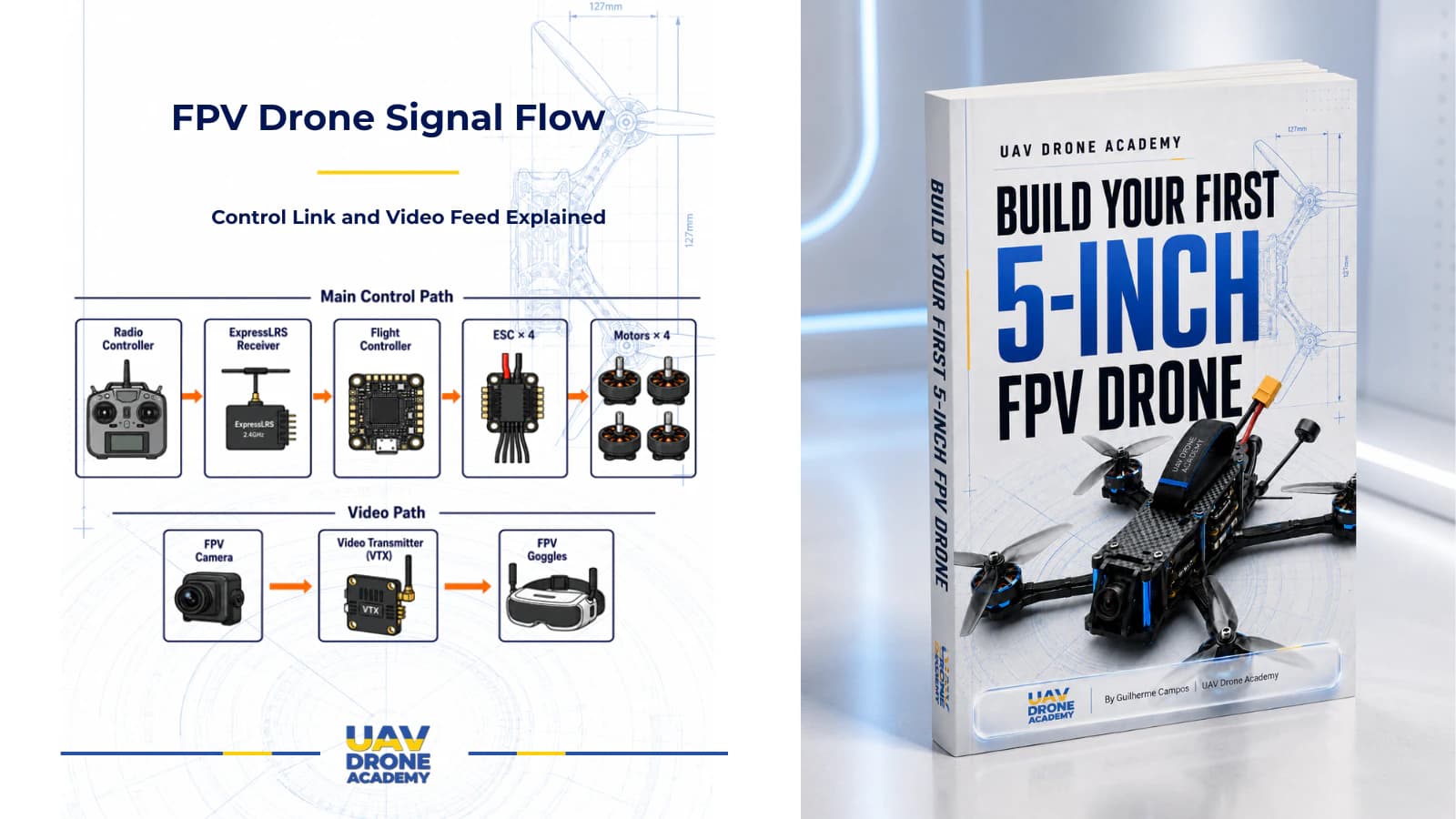
The control path is:
Radio Controller → Receiver → Flight Controller → ESCs → Motors
The video path is:
FPV Camera → VTX → FPV Goggles
One system controls the drone.
The other system sends the live image back to the pilot.
Both systems are required for FPV flying.
Understanding this separation makes wiring and troubleshooting much easier.
What Beginners Should Focus On First
For beginners, the most important goal is not to build the most advanced drone.
The goal is to build a reliable drone that is easy to understand and repair.
Focus on:
- compatible parts
- clean wiring
- safe soldering
- good antenna placement
- secure mounting
- correct motor direction
- correct propeller direction
- safe battery handling
- proper Betaflight configuration
- careful pre-flight checks
A simple, reliable build is better than a complicated build that is difficult to troubleshoot.
Common Beginner Mistakes
Buying Random Parts
A drone is a system.
The parts must work together.
Do not buy components only because they look powerful or popular.
Ignoring Compatibility
Frame size, motor size, propeller size, ESC rating, battery voltage, and mounting patterns must all make sense together.
Underestimating Tools
Good tools make the build safer and easier.
A poor soldering iron can create bad joints and frustration.
Forgetting Small Hardware
Screws, standoffs, straps, zip ties, and heat shrink are essential for a clean build.
Mixing Up Control and Video Systems
The receiver controls the drone.
The VTX sends video.
They are different systems.
Skipping Pre-Build Planning
Before soldering, know where every component will go.
Plan wire routing, antenna placement, battery position, and stack mounting.
A Simple Beginner Parts Overview
A beginner-friendly 5-inch FPV drone build can be understood like this:
- frame: structure
- motors: thrust generation
- propellers: air movement
- ESC: motor power control
- flight controller: stabilization and command processing
- receiver: radio control input
- FPV camera: live image capture
- VTX: video transmission
- antennas: radio and video signal performance
- battery: electrical power
- hardware: secure assembly
- tools: safe building and maintenance
Once you understand these roles, the build becomes much less intimidating.
Part of the Book
This content is part of our book:
Build Your First 5-Inch FPV Drone │ UAV Drone Academy
A complete beginner’s guide designed to help new pilots understand, build, configure, test, fly, maintain, and upgrade their first 5-inch FPV drone with confidence.
Before you build, organize the parts.
Before you solder, understand the system.
Before you fly, check everything.
Conclusion
A 5-inch FPV drone is not just one product.
It is a complete system made from mechanical, electrical, radio, video, power, and software components.
The main components include:
- frame
- motors
- propellers
- ESC stack
- flight controller
- FPV camera
- VTX
- radio receiver
- antennas
- LiPo battery
- screws, standoffs, and mounting hardware
- soldering and assembly tools
Each part has a specific role.
Each part must work with the rest of the system.
A reliable FPV drone is built from compatible components, clean assembly, safe wiring, and careful testing.
Before you build, organize the parts.
Before you solder, understand the system.
Before you fly, check everything.
This is the foundation of a reliable 5-inch FPV drone build.