
Batteries, Beginner, Power Systems, System
UAV Power Systems: Batteries, Power Distribution, and Noise Management
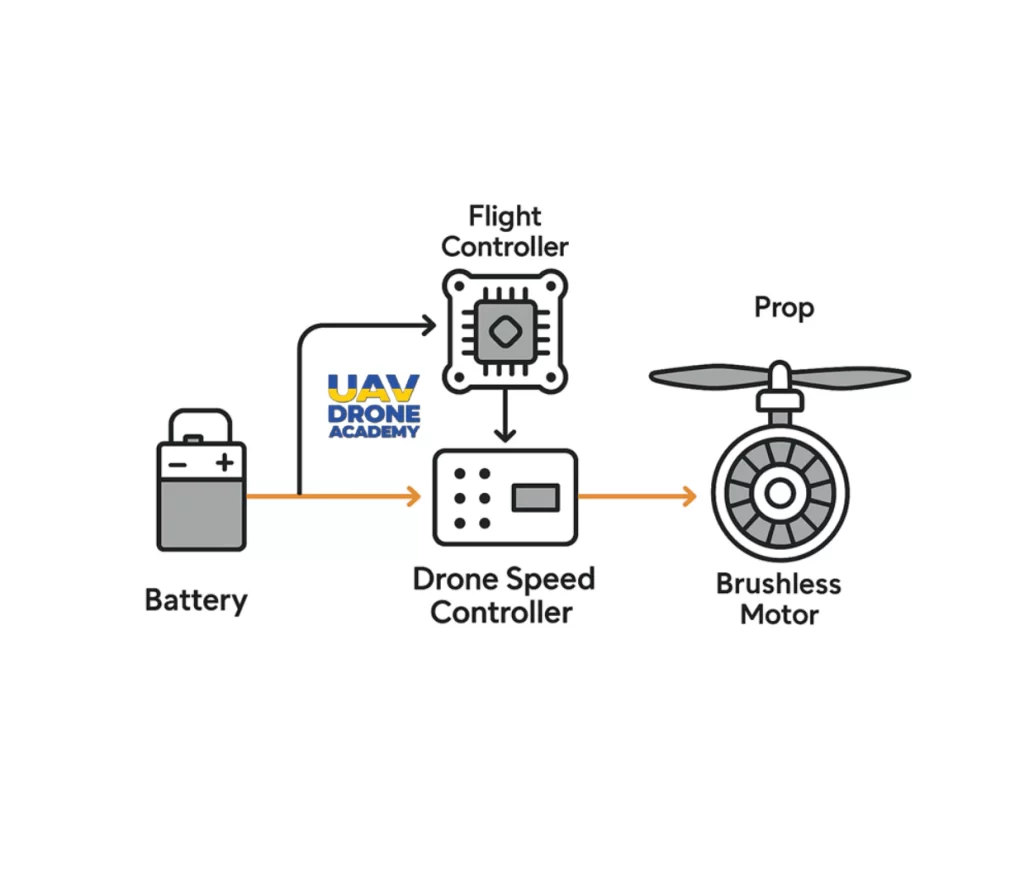
After defining the airframe and propulsion system, the next critical subsystem in any UAV is power.
The power system determines how energy is stored, distributed, and conditioned across the entire platform.
In UAV engineering, many stability, reliability, and “software” issues are actually power system problems in disguise.
The Role of the Power System in a UAV
As discussed in Understanding UAV Architecture: Subsystems and Integration, the power system interacts directly with:
- Propulsion (motors and ESCs)
- Flight control electronics
- Communication systems
- Payloads and sensors
If power delivery is unstable, every other subsystem is affected.
Batteries: Energy Storage and Limitations
Most UAVs rely on lithium-based batteries due to their high energy density.
Key battery parameters include:
- Voltage (cell count)
- Capacity (mAh or Ah)
- Discharge rating (C-rating)
- Internal resistance
Battery selection is always a trade-off between:
- Weight
- Endurance
- Peak current capability
- Safety margins
Oversizing increases weight; undersizing causes voltage sag and instability.
Power Distribution and Regulation
The power distribution system ensures that energy reaches each subsystem safely and reliably.
This includes:
- Power distribution boards (PDBs)
- Wiring and connectors
- Voltage regulators (BECs, DC-DC converters)
Different subsystems often require different voltage levels, and poor regulation can lead to:
- Brownouts
- Sensor noise
- Communication dropouts
Clean power is a prerequisite for stable flight control.
Electrical Noise and Interference
Electrical noise is one of the most underestimated challenges in UAV systems.
Common noise sources include:
- ESC switching
- High-current motor lines
- Poor grounding
- Inadequate filtering
Noise can propagate into:
- IMU sensors
- GNSS receivers
- Radio communication links
Managing noise requires careful routing, filtering, and separation — not software tuning.
Power System Design as a System-Level Problem
Power systems cannot be designed in isolation.
Every power decision affects:
- Motor efficiency
- Thermal behavior
- Flight controller stability
- Overall system reliability
This is why experienced engineers treat power architecture as a core design discipline, not an afterthought.
Common Power System Mistakes
Typical beginner errors include:
- Underestimating peak current demand
- Mixing noisy and sensitive loads without isolation
- Poor connector and wire selection
- Relying on default power layouts
These mistakes often manifest as intermittent or hard-to-diagnose failures.
What Comes Next?
With energy storage and distribution defined, the next subsystem to analyze is control.
In the following article, we will explore:
This will connect electrical stability to control performance and system behavior.

Pingback: UAV Propulsion Systems: Motors, Propellers, and Thrust Optimization | UAV Drone Academy
Pingback: Understanding UAV Architecture: Subsystems and Integration | UAV Drone Academy
Pingback: UAV System Integration: Managing Interdependencies and Trade-Offs | UAV Drone Academy
Pingback: UAV Reliability and Failure Analysis: Designing for Robustness | UAV Drone Academy
Pingback: Redundancy and Safety Strategies in UAV Systems | UAV Drone Academy
Pingback: The UAV Engineering Learning Path: Beginner to Advanced