
Beginner, Motors, Propellers, Propulsion, System, Thrust
UAV Propulsion Systems: Motors, Propellers, and Thrust Optimization
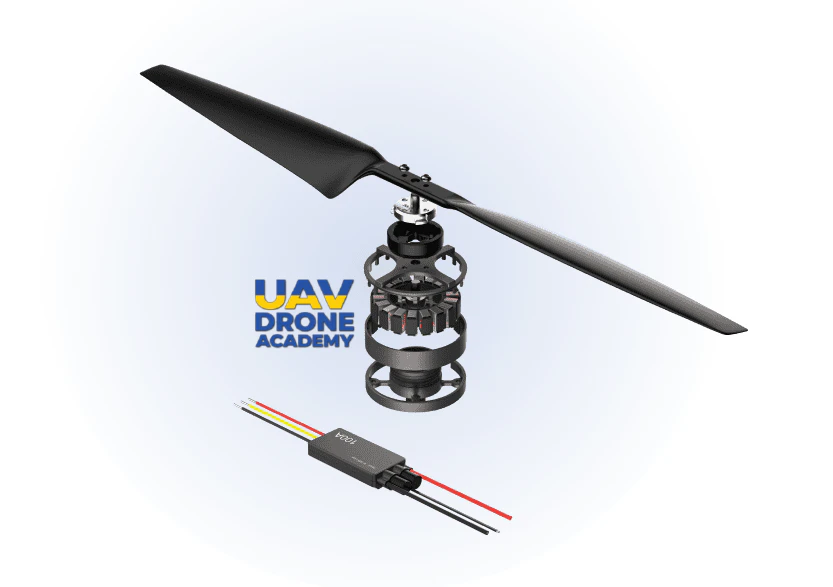
Once the UAV airframe is defined, the next critical subsystem is propulsion.
Propulsion is what transforms electrical energy into controlled thrust, enabling lift, maneuverability, and mission execution.
In UAV engineering, propulsion design is not about choosing the most powerful motor — it is about matching motors, propellers, and operating conditions to the system as a whole.
The Role of Propulsion in a UAV System
As established in Understanding UAV Architecture: Subsystems and Integration, propulsion does not operate in isolation.
It interacts directly with:
- Airframe geometry and stiffness
- Power system limits
- Flight control algorithms
- Mission requirements
Poor propulsion choices can overload the power system, induce vibration, and reduce control authority.
Core Components of a UAV Propulsion System
A typical UAV propulsion system consists of three tightly coupled elements:
1. Motors
Brushless DC motors are the standard in most UAVs.
Key motor parameters include:
- KV rating (RPM per volt)
- Torque capability
- Efficiency curve
- Thermal limits
Higher KV does not mean better performance — it means different operating behavior.
2. Propellers
Propellers convert rotational motion into thrust.
Critical variables include:
- Diameter
- Pitch
- Blade count
- Airfoil profile
Propeller selection directly affects:
- Thrust efficiency
- Current draw
- Noise and vibration
- Thermal stress on motors and ESCs
3. Electronic Speed Controllers (ESCs)
ESCs regulate motor speed and torque.
Their role extends beyond simple switching:
- Commutation strategy
- Response latency
- Current handling
- Thermal management
ESC behavior directly influences control responsiveness and reliability.
Thrust, Torque, and Efficiency
Effective propulsion design balances three competing factors:
- Required thrust
- Electrical efficiency
- Thermal stability
Oversized motors with aggressive propellers may produce high thrust but:
- Waste energy
- Overheat components
- Reduce flight time
Efficient systems deliver just enough thrust, at the lowest possible electrical and thermal cost.
Propulsion-Induced Vibration
Propulsion is one of the primary sources of vibration in UAV systems.
Common causes include:
- Propeller imbalance
- Motor bearing wear
- Poor motor mounting
- Resonance with the airframe
These vibrations propagate directly into:
- IMU sensors
- Flight control loops
- Payload systems
This reinforces why propulsion and airframe design must be considered together.
Propulsion as a System-Level Trade-Off
Every propulsion choice affects:
- Battery size and discharge rate
- ESC current margins
- Structural loading
- Acoustic signature
There is no “best motor” or “best propeller” — only appropriate combinations for a given mission.
What Comes Next?
With propulsion defined, the next subsystem to analyze is energy supply and distribution.
In the following article, we will explore:
This will complete the link between thrust generation and electrical constraints.

Pingback: UAV Airframe Design: Structure, Materials, and Vibration Control | UAV Drone Academy
Pingback: Understanding UAV Architecture: Subsystems and Integration | UAV Drone Academy
Pingback: The UAV Engineering Learning Path: Beginner to Advanced