
Intermediary, Redundancy, Safety, System
Redundancy and Safety Strategies in UAV Systems
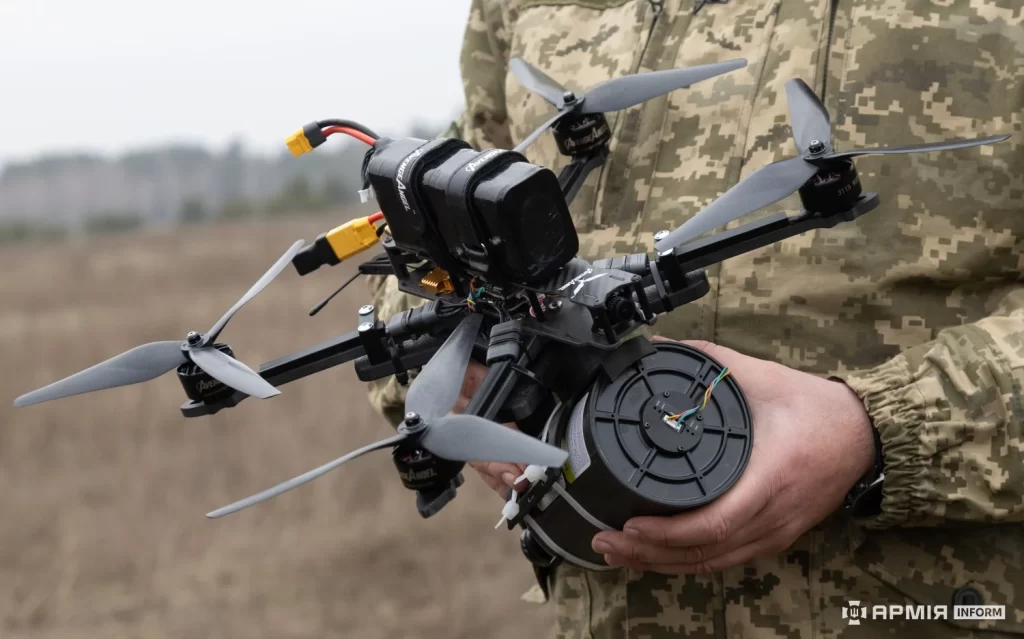
After analyzing failure modes and reliability engineering principles, the next step in UAV system maturity is understanding redundancy and safety strategies.
No complex system can eliminate failure entirely.
Instead, advanced UAV engineering focuses on:
- Reducing the probability of failure (reliability)
- Reducing the consequences of failure (redundancy)
Redundancy is not about duplication for its own sake. It is about risk mitigation under mission-critical conditions.
Reliability vs Redundancy
As discussed in UAV Reliability and Failure Analysis: Designing for Robustness, reliability engineering identifies weak points and failure propagation paths.
Redundancy builds on that knowledge.
Reliability asks:
How can we prevent failure?
Redundancy asks:
What happens if failure still occurs?
Both are necessary for robust UAV design.
Types of Redundancy in UAV Systems
Redundancy can be implemented at different levels.
1. Hardware Redundancy
Examples include:
- Dual flight controllers
- Multiple IMUs
- Redundant power supplies
- Dual communication links
Hardware redundancy increases complexity but improves fault tolerance.
2. Power Redundancy
Power systems are common single points of failure.
Strategies include:
- Independent battery packs
- Isolated power rails for critical electronics
- Backup voltage regulators
This builds directly on principles discussed in UAV Power Systems: Batteries, Power Distribution, and Noise Management.
3. Sensor Redundancy
Multiple sensors can provide:
- Cross-validation
- Fault detection
- Failover capability
For example:
- Dual GNSS receivers
- Multiple IMUs
- Barometer plus GNSS altitude reference
Sensor fusion algorithms can detect inconsistencies and isolate faulty inputs.
4. Communication Redundancy
Communication loss is a critical risk.
Mitigation strategies include:
- Secondary control link
- Independent telemetry channels
- Autonomous failsafe logic
These strategies build on the concepts discussed in UAV Communication Systems: Radio Links, Telemetry, and Video Transmission.
Redundancy Trade-Offs
Redundancy is not free.
It introduces:
- Additional weight
- Increased power consumption
- Greater integration complexity
- Higher cost
Engineers must balance redundancy against mission requirements and risk tolerance.
Over-redundancy can reduce efficiency and introduce new failure modes.
Safety Architecture Thinking
Effective safety strategy requires:
- Identifying single points of failure
- Determining mission-critical subsystems
- Designing graceful degradation modes
- Ensuring predictable failsafe behavior
Safety is not only about hardware — it includes firmware logic, communication protocols, and human factors.
Designing for Graceful Degradation
In high-maturity UAV systems, failure does not lead to immediate collapse.
Instead, systems are designed to:
- Reduce performance safely
- Trigger return-to-home
- Switch to backup systems
- Alert the operator
Graceful degradation is a hallmark of well-engineered redundancy.
What Comes Next?
With reliability and redundancy addressed, the next step in advanced UAV engineering is performance optimization under constraints.
In the following article, we will explore:
UAV Performance Optimization: Balancing Efficiency, Stability, and Mission Requirements
This will complete the Camada 3 progression from failure awareness to engineered performance.

Pingback: UAV Reliability and Failure Analysis: Designing for Robustness | UAV Drone Academy
Pingback: The UAV Engineering Learning Path: Beginner to Advanced