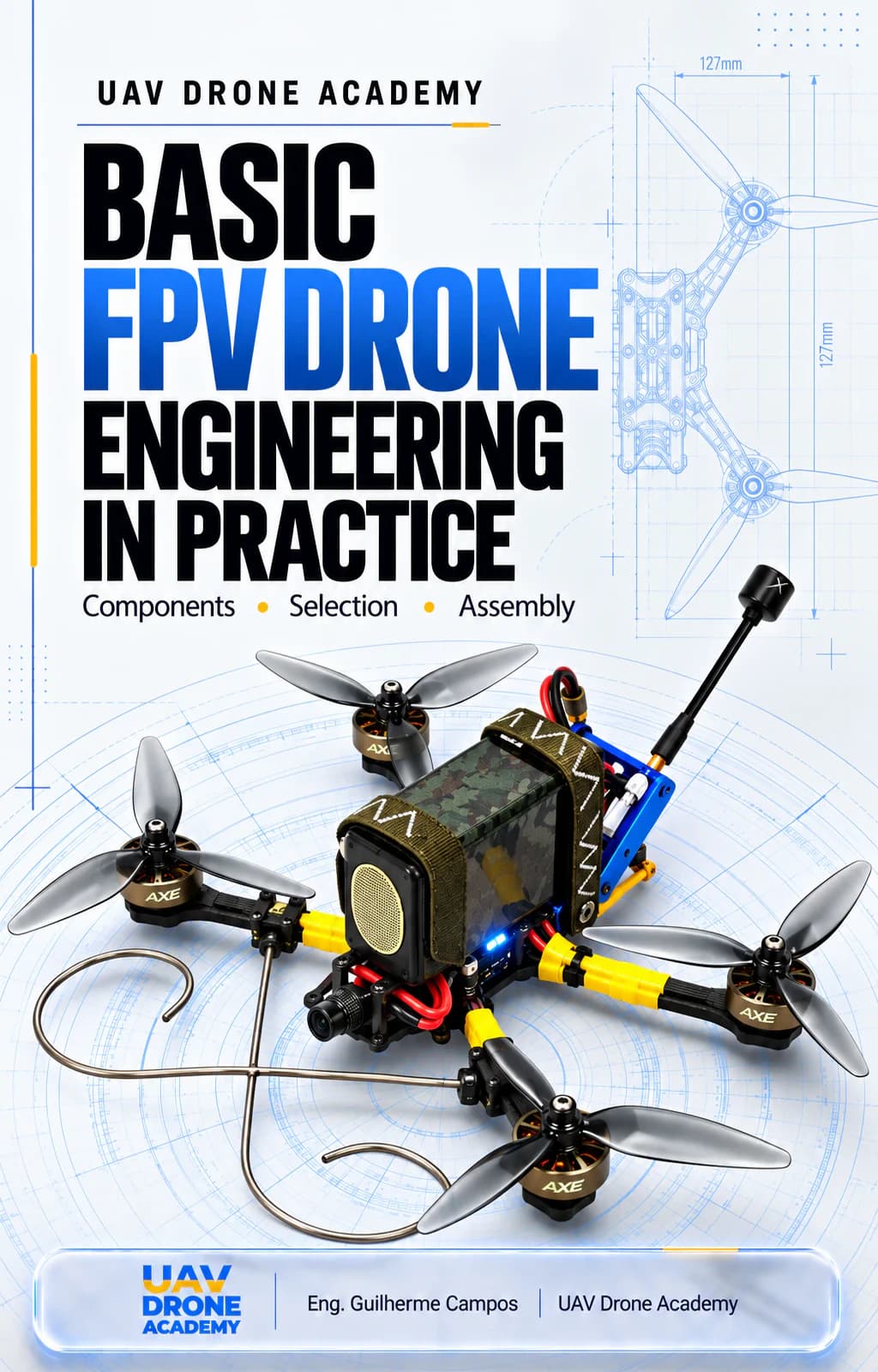
UAV Drone Academy is pleased to announce the release of a new book:
BASIC FPV DRONE ENGINEERING IN PRACTICE
Components, Selection, and Assembly
This book was created for beginners who want to understand FPV drones from a practical engineering point of view.
It is not only about buying parts.
It is not only about following an assembly sequence.
It is about understanding how the complete FPV drone system works.
Before you build, understand the system.
Why This Book Was Created
Many beginners enter FPV by watching videos, copying parts lists, and trying to assemble a drone without fully understanding what each component does.
That approach can work for simple builds, but it often creates confusion when something goes wrong.
A drone may not arm.
A motor may spin in the wrong direction.
The video may not appear in the goggles.
The receiver may not connect.
The battery may sag too much.
The drone may vibrate, drift, overheat, or crash.
In those moments, memorizing parts is not enough.
You need to understand the system.
That is the reason this book was created.
A Practical Engineering Approach to FPV
BASIC FPV DRONE ENGINEERING IN PRACTICE was written to help beginners understand FPV drones as integrated systems.
A 5-inch FPV drone is not just a frame with motors.
It is a combination of:
- mechanical structure
- propulsion
- power distribution
- flight control
- radio communication
- video transmission
- antennas
- batteries
- wiring
- software configuration
- testing
- maintenance
- upgrades
Each part has a specific role.
Each part affects the rest of the system.
A good FPV drone is not built from expensive components alone.
It is built from compatible parts, clean assembly, safe wiring, correct configuration, and practical understanding.
What the Book Covers
The book guides the reader through the main areas involved in building and understanding a beginner FPV drone.
Topics include:
- FPV drone fundamentals
- 5-inch FPV drone platform overview
- frame selection
- motor selection
- propeller selection
- ESC and flight controller basics
- radio receivers and control links
- FPV cameras, VTX, antennas, and goggles
- LiPo batteries and power systems
- soldering and wiring
- component compatibility
- Betaflight configuration
- receiver setup
- motor direction and propeller setup
- OSD configuration
- pre-flight checks
- first hover test
- first controlled flights
- post-flight inspection
- maintenance
- common crash damage
- beginner upgrades
The goal is to build understanding step by step.
Who This Book Is For
This book was written for:
- beginners entering FPV for the first time
- students interested in drone engineering
- makers and DIY builders
- drone enthusiasts who want to understand the system
- pilots who want to move beyond ready-to-fly drones
- technical readers interested in UAV fundamentals
- anyone planning to build a 5-inch FPV drone
You do not need to be an expert before reading this book.
The book was designed to explain the subject in a structured and beginner-friendly way.
More Than an Assembly Guide
An assembly guide tells you where parts go.
This book goes further.
It explains why each part matters.
For example:
- why propeller size affects motor selection
- why motor direction matters
- why the flight controller is the brain of the drone
- why the ESC controls motor power
- why the receiver and VTX are different systems
- why antennas affect reliability
- why battery choice changes flight behavior
- why clean wiring matters
- why pre-flight checks are essential
- why maintenance is part of FPV ownership
The objective is not just to complete a build.
The objective is to understand what you are building.
Understanding the Complete FPV System
One of the most important lessons in FPV is that everything is connected.
A drone is a system.
The frame affects vibration and durability.
Motors and propellers affect thrust, efficiency, and current draw.
The battery affects voltage, flight time, and weight.
The ESC must support the power demand.
The flight controller must process pilot commands and stabilize the aircraft.
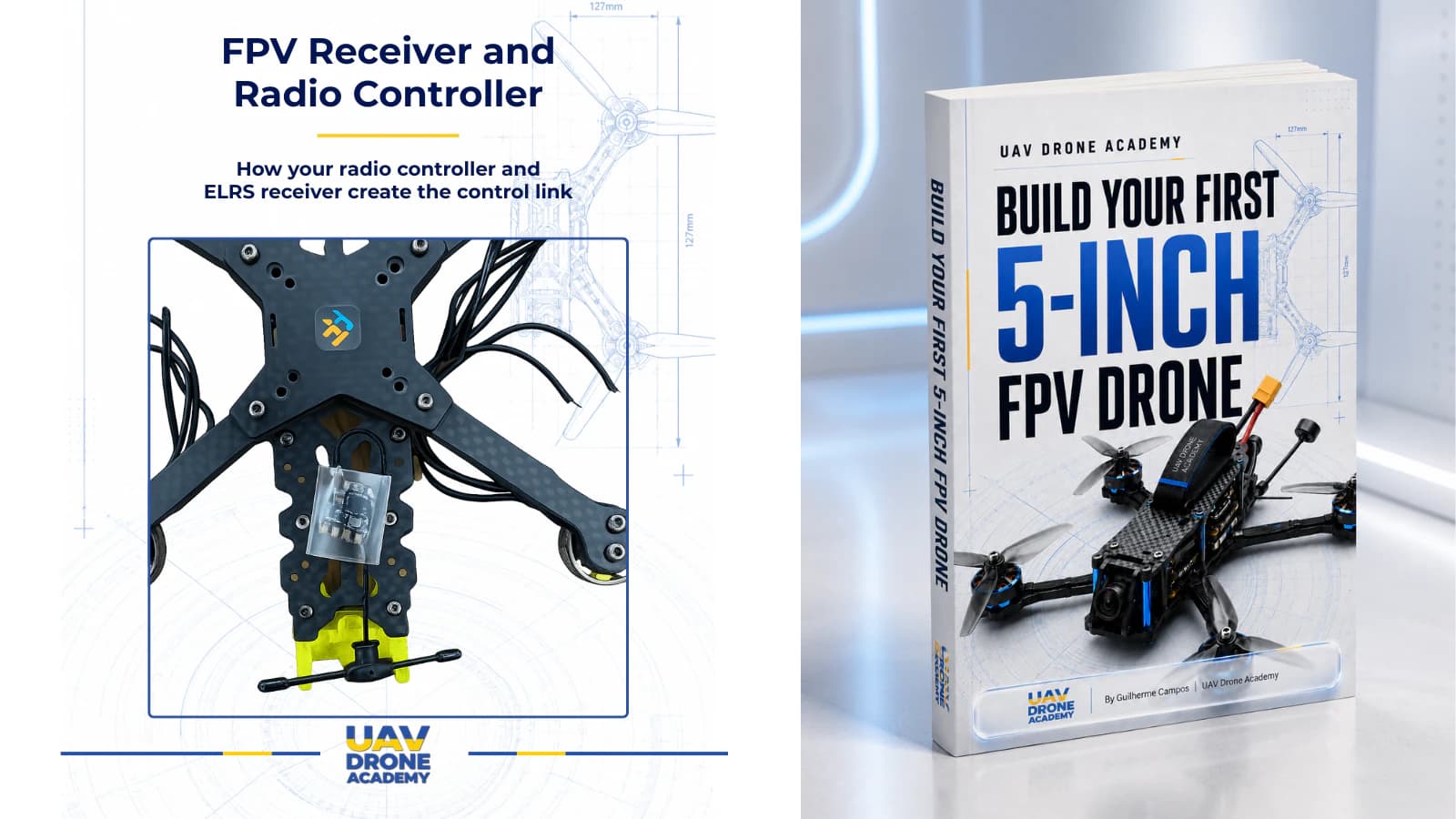
The receiver brings radio commands into the drone.
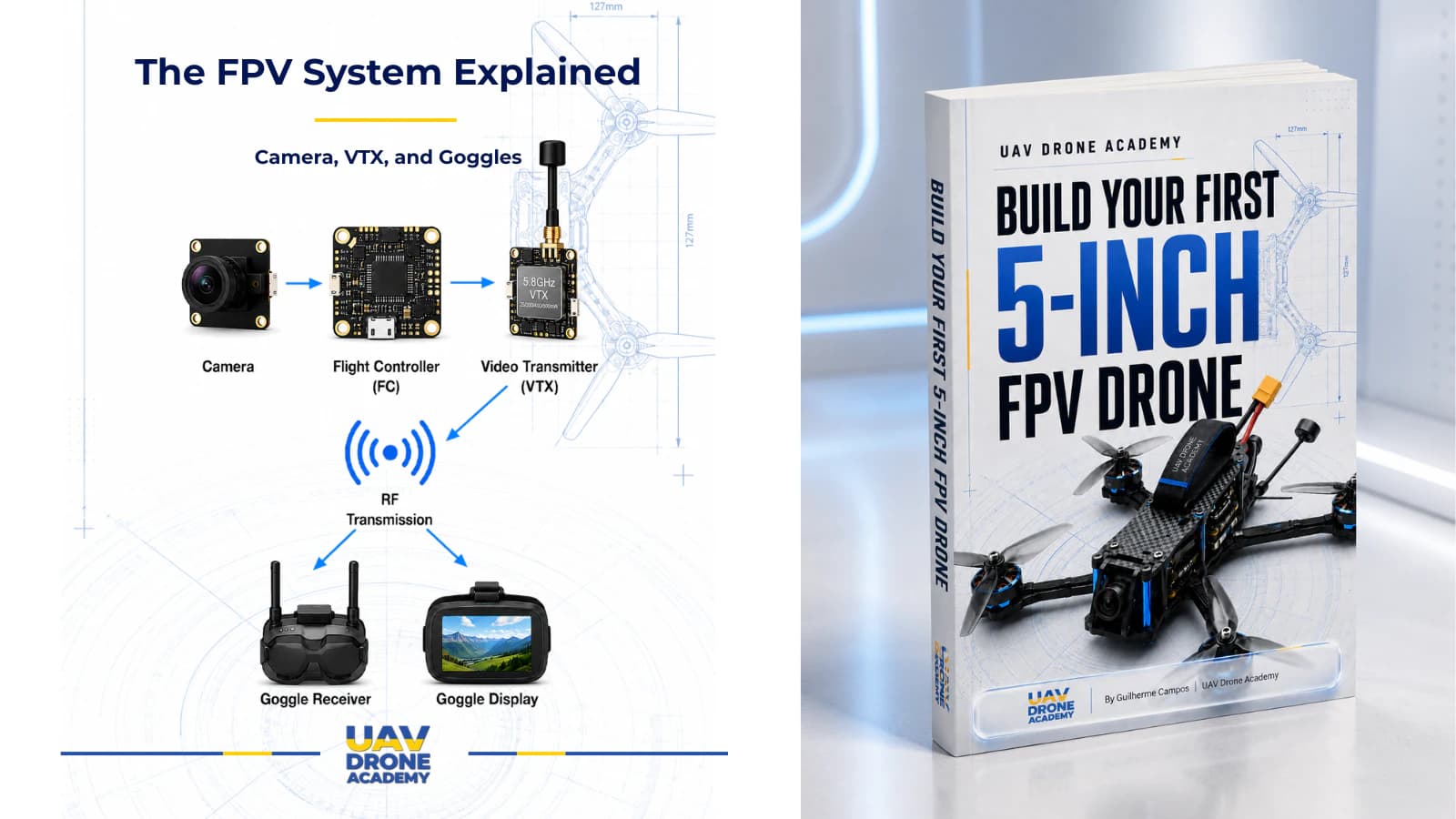
The FPV camera and VTX send the live image back to the pilot.
Antennas affect control and video reliability.
Betaflight configuration connects the hardware to the behavior of the aircraft.
When beginners understand these relationships, FPV becomes much less intimidating.
Why 5-Inch FPV?
The 5-inch FPV platform is one of the most popular categories in FPV.
It offers a strong balance between:
- power
- agility
- stability
- repairability
- parts availability
- upgrade potential
- learning value
A 5-inch drone is powerful enough for freestyle, fast enough for racing-style practice, stable enough for outdoor training, and large enough to work on comfortably.
That makes it an excellent platform for learning.
It is not the only FPV platform, but it is one of the best platforms for understanding how FPV drones really work.
Practical Skills Covered
This book also focuses on practical skills.
Readers are introduced to important tasks such as:
- organizing components before assembly
- checking compatibility
- planning wire routing
- soldering safely
- mounting electronics
- connecting a receiver
- wiring an FPV camera and VTX
- checking motor order
- checking motor direction
- setting up Betaflight
- configuring basic OSD information
- performing pre-flight inspections
- reviewing the drone after flight
- identifying common beginner problems
These are the skills that help transform a collection of parts into a reliable flying aircraft.
Safety and Reliability
FPV drones are powerful machines.
Even beginner builds require care.
The book emphasizes safety and reliability throughout the process.
Important topics include:
- LiPo battery safety
- propeller safety
- smoke stopper use
- continuity checks
- motor testing without propellers
- receiver failsafe awareness
- antenna installation
- wiring inspection
- post-crash inspection
- maintenance routines
A safe FPV pilot does not simply fly until something breaks.
A safe FPV pilot checks, tests, inspects, repairs, and learns.
A Book for Building Understanding
The main idea behind this book is simple:
Before you build, understand the system.
FPV becomes much more enjoyable when you know what each component does and how the complete aircraft works.
Instead of guessing, you can diagnose.
Instead of copying blindly, you can make informed decisions.
Instead of being afraid of repairs, you can understand what failed and why.
That is the engineering mindset behind this book.
Available on Amazon
BASIC FPV DRONE ENGINEERING IN PRACTICE is now available on Amazon.
You can find the book here:
About UAV Drone Academy
UAV Drone Academy was created to help students, beginners, builders, and technical enthusiasts understand drones from a practical engineering perspective.
The focus is not only on flying.
The focus is on understanding systems.
That includes FPV drones, UAV components, integration, configuration, troubleshooting, and practical learning.
This book is part of that mission.
Conclusion
BASIC FPV DRONE ENGINEERING IN PRACTICE is a beginner-friendly guide for anyone who wants to understand FPV drones beyond the surface level.
It covers components, selection, assembly, wiring, configuration, testing, maintenance, and upgrades from a practical engineering point of view.
The book was created to help new pilots and builders understand how a 5-inch FPV drone works as a complete system.
Before you build, understand the platform.
Before you solder, understand the system.
Before you fly, check everything.
That is the foundation of a safer, cleaner, and more reliable FPV drone build.