Introduction
In the UAV (Unmanned Aerial Vehicle) ecosystem, the interface between the flight system and the payload is critical. The FCAT V 1.0 board emerges as a robust solution for initiation management, combining rigorous safety protocols with multiple activation methods. In this article, we explore the technical aspects and best integration practices for this component.
- What is the FCAT V 1.0?
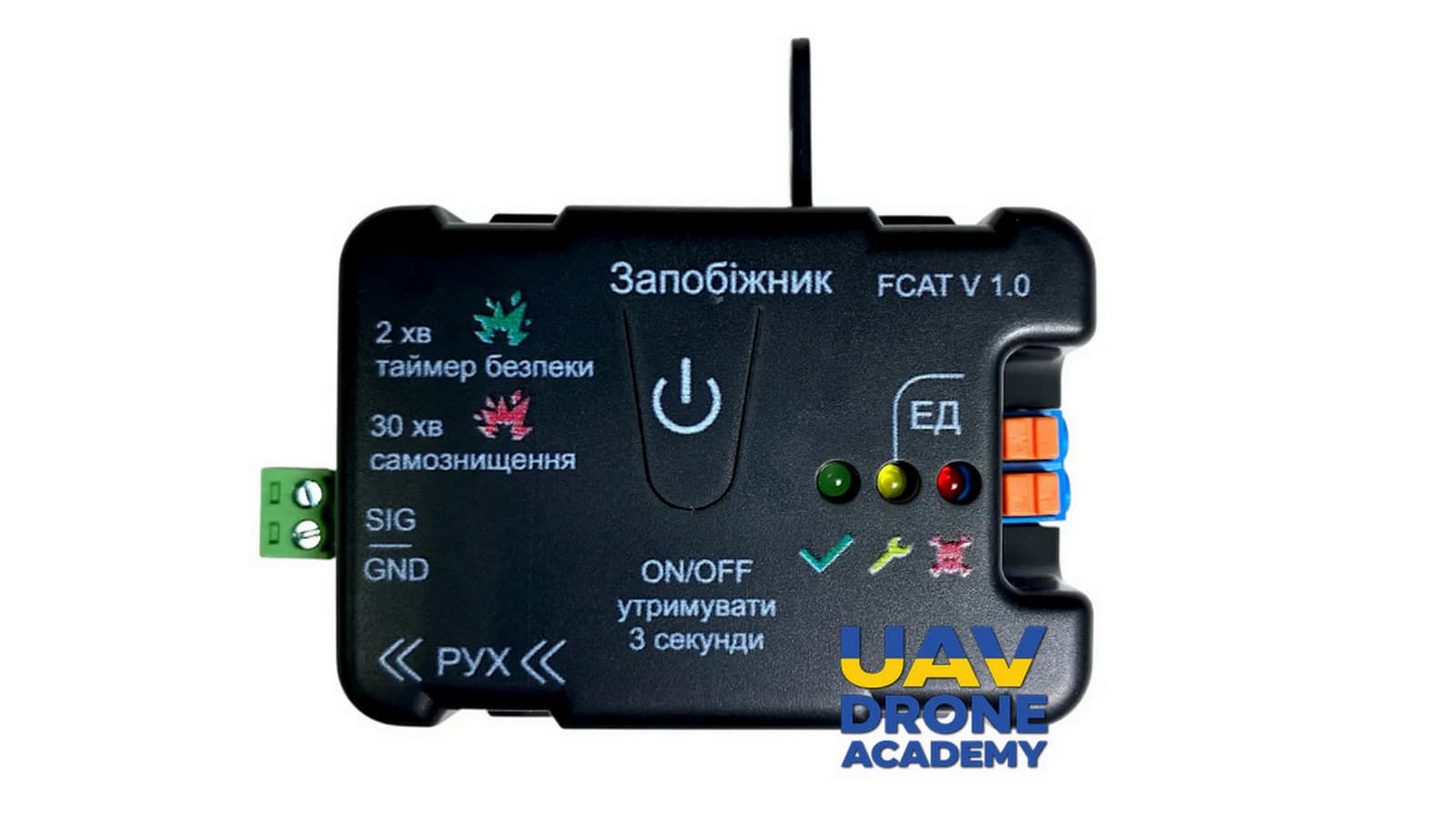
The FCAT V 1.0 is a payload control module designed to operate under extreme conditions. Unlike simple switches, it features onboard intelligence to prevent accidental activations, utilizing a system of both logical and physical “arming.”
- Triple Activation Architecture
One of the major advantages of this board is its redundancy, offering three modes of operation: Impact Sensor (Inertial): Activation via G-force (above 10G), ideal for contact missions. Remote Command (PWM): Direct integration with the radio control via Betaflight/Ardupilot, allowing manual triggering by the operator. Self-Destruct Timer: A passive safety layer that ensures the neutralization of the payload after a predetermined period (e.g., 30 minutes).
- Technical Integration and Pinout
For engineers and builders, the FCAT V 1.0 follows the industry standard stacking format: Dimensions: 36x36mm (standard 30.5mm mounting holes). Power Supply: Flexible voltage from 5V to 12V. Control Signal: Requires an auxiliary channel configured for a 2000 µs pulse for triggering.
- Safety Protocols in Handling
Safety Pin: Never remove the physical pin before performing a signal continuity test. Visual Indicators: The use of status LEDs (Green/Red) is essential for pre-flight diagnostics. Test Environment: We recommend using buzzers or test LEDs instead of real initiators during the software configuration phase.
Real-World Combat Scenario Applications Tactical Applications in Modern Warfare The FCAT V 1.0 has become a standard component in theaters of operation where the use of “FPV Kamikaze Drones” and loitering munitions is intensive. Its real-world applications include:
Precision Strikes with FPV Drones: The board allows adapted civilian drones to carry engineering munitions (such as RPG-7 warheads). The inertial mode ensures the payload detonates upon impact with armored vehicles or trenches, even if the radio signal is lost in the final seconds due to Electronic Warfare (jamming).
Area Interdiction Munitions: Using the self-destruct timer, operators can deploy payloads in denial zones. If the target is not hit or the drone crashes without detonating, the board ensures the equipment self-eliminates, preventing the technology or explosive from being captured and reused by the enemy.